
AIRLINE SELECTION PROGRAMME
eLearning platform
5 CV Mistakes Pilots Make Before an Airline Interview (And How to Fix Them)
Your CV gets about 30 seconds of attention from a recruiter, maybe less. In those 30 seconds, they are looking for specific information. If they cannot find what they need quickly, you have created frustration. That frustration becomes a negative first impression before you even walk into the interview room.
I have evaluated and read thousands of pilot CVs. Most pilots approach their CV completely wrong.
Here are the five most common mistakes, and exactly how to avoid them.
How Your CV Actually Gets Read
Before going into the mistakes, let’s first see what the process is like.
At the application stage, your CV is likely being processed by AI systems first. They scan for keywords, check for basic requirements, and filter the initial applicant pool. But then, around ten minutes before your interview, your CV lands on a real recruiter's desk. This is when a human actually reads it.
The recruiter is trying to answer a few simple questions quickly: who are you, in a few words? How old are you? What have you done, and when? What major decisions have you made? Are there any gaps that need explaining?
If they cannot find this information quickly, if they have to hunt through a mix of bullet points, sentences, and icons, or decipher a confusing layout, they get frustrated. And that frustration becomes your first impression.
Mistake 1: Too Much Detail
Many pilots pack their CVs with excessive information, thinking that volume will impress. This is particularly common in the work experience section, where pilots detail every minor responsibility and routine duty that is already obvious from the job title.
The recruiter does not need that level of detail. They need to understand your trajectory, and they need to understand it quickly. Being concise is an art, and it has to be applied in the CV.
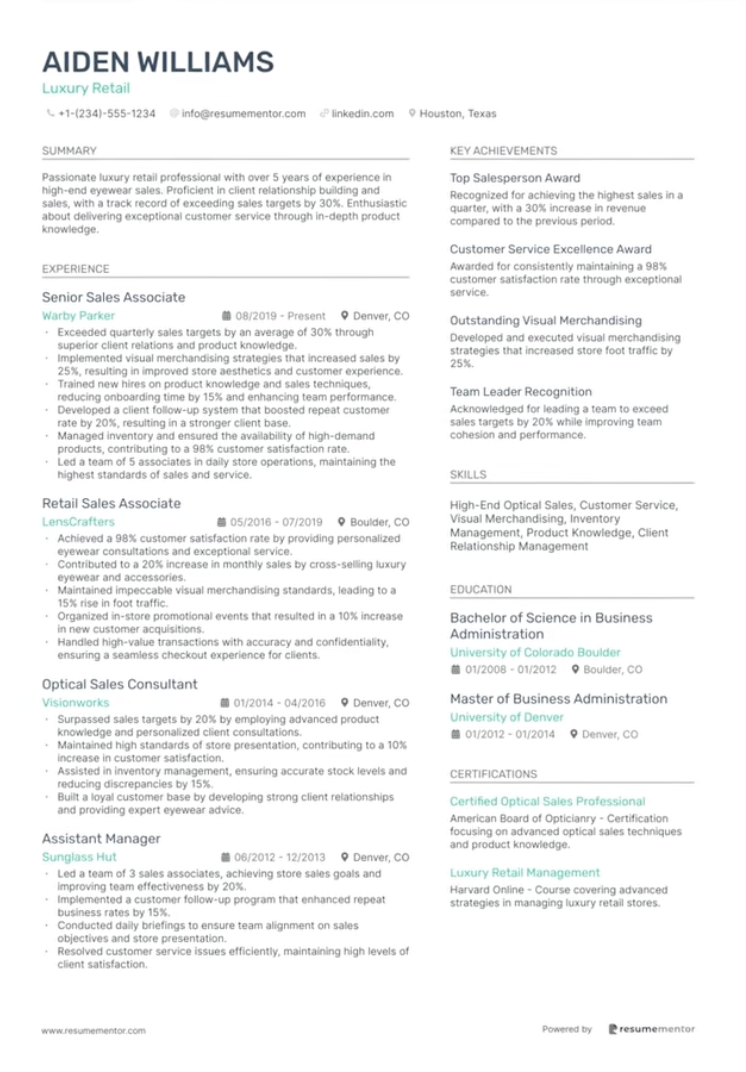
Here is an example of what not to do:
"I was responsible for the safe and efficient operation of the Boeing 737 fleet on various routes throughout Europe, ensuring compliance with all relevant regulations and maintaining the highest standards of professionalism and customer service."
That is a pilot explaining what they did as a Boeing 737 First Officer. The title was enough. The long sentence adds nothing specific that the recruiter does not already know.
Here is what it should look like instead:
2022 to 2024, First Officer:
Boeing 737-800 and MAX series, 800 hours, major European routes.
Clean, clear, concise. The CV is a summary, not a biography.
The layout of your CV is an important part of how your CV is perceived. Some pilots use creative designs, unusual formats, misaligned columns, and icons that force the reader's mind to translate a symbol into a word before they can process the information. It may look impressive, but it makes the information harder to find.
The recruiter is under time pressure just before you enter the room, and they are not evaluating your graphic design skills. They are trying to quickly understand your background. If your layout slows them down, it is working against you.
Clean and clear beats creative and confusing every time.
Recruiters see CVs with no age, no mention of high school education, and unexplained gaps on a regular basis. These are not minor details. They are fundamentals.
When information is missing, the recruiter has to either guess or reach out for clarification. That creates extra work and frustration. If your age is not on the CV, they will compute it from another data point such as your high school graduation date. Making their life easy is what should guide every decision you make about your CV.
One point worth clarifying: recruiters want your age because they will tailor the interview to your life experience. It has nothing to do with age discrimination.
If you are transitioning from another industry, from engineering, from the military, or from a completely different field, you may use terminology that means nothing to an airline recruiter. Acronyms and jargon from other sectors bring no valuable information.
You should translate your experience into language an airline recruiter understands.
Strong communication skills. Team player. Detail oriented. Problem solver.
These statements can make it look like you lack humility, particularly when they come with a star rating system. More importantly, they belong in the cover letter, where you can bring context to support them, or better still, at the interview itself where you can actually demonstrate them.
There is one exception: some airlines ask you to list skills in the CV rather than submitting a cover letter. In that case, follow their requirements. But in general, do not waste CV space making claims without evidence or context that you will be able to explain far better face to face.
The CV exists for the recruiter to have an idea of who you are, what you have done and when, to understand the major decisions you have taken in your life, and to see if there are any gaps worth discussing. That is all. Not to impress them with design, not to tell them your life story, not to list generic qualities. Clear, concise, factual information about your professional journey.
Get that right, and your CV becomes a springboard into the interview. Get it wrong, and you may never get the chance to show what you can do.
The Cover Letter Matters Just as Much
Pilots make mistakes with their CVs. They make even bigger ones with their cover letters. The next post covers the four most common cover letter mistakes and exactly how to fix them.
In the meantime, if you want detailed guidance on both documents, the CV and Cover Letter course at Airline Selection Programme covers exactly this: how to structure your CV for airline applications, how to write a cover letter that demonstrates real understanding of the airline, what to include, what to cut, and how to present yourself as effectively as possible. Including templates, examples, a checklist, and detailed guidance included.
→ Find out more about the CV and Cover Letter course

Almost there!
Almost there!
5 AUTOMATIC FAILS
I also benefited from this service as it helped me better know myself, which will help me prepare relevant examples for the interview. Definitely worth the investment.
So thank you!"
I’ve been flying for 10 years and professionally (not airlines) for 5 years, I’ve been to many ATOs, met many pilots, read books on the subject but never did I understand what the airline interview was all about before following the ASP course, and I thank you for that because it brings so much peace understanding the rules of games.
As I understand it’s not about telling the interviewers what they want to hear by being someone we are not, and it’s not about telling them true stories that has no use for them, but it’s about looking into our past for evidence of the competencies that they are looking for, preparing answers by funneling the key competencies that we have within ourselves and showcase them from past events, discarding irrelevant stuff, thus making their job easier and enhancing a pleasant overall experience.
PS : I just received a positive answer to my interview.
I took the Psy2 HOP in September and not wanting to make the same mistake, I took an AIC preparation at ASP, I also added a 1:1 interview supplement with Guillaume. Note that I also passed the Wizzair selections which I succeeded (also in September) The 2 selection processes are different but the AIC allowed me to better understand the expectations of recruiters.
For each of the 2 companies, I did a lot of personal work on the operating mode of the companies so as not to get caught during the interviews. As a good student, I thought about the most relevant examples I could give by filling in the boxes in the excel skills table… a bit laborious but it allows you to sort by choosing the most relevant examples.
I focused my examples on recent flights (< 3 years) but not only, especially the flight that marked you the most… there’s only one and it was 15 years ago!
I really appreciated the 16PF and the debriefing is important to understand, I think about 3/4 were common with the brief debriefing done at the end of the individual psy2 interview.
By understanding the philosophy of the individual interview, I did not go there on the defensive (like the first time) but with the spirit of dispelling the doubts they could express and confirm their expectations. For the group tests, for Wizz or Hop, I made sure to be the good second, to give everyone a chance to speak. I did not chase my nature, I just made sure not to be too enthusiastic. In my case the 1:1 interview was very profitable because I wanted to see the adequacy of the questions asked by the recruiter according to the 16PF without forgetting the debriefing that goes with it… It reassured me about my ability to succeed (even if everything is not in my hands!!!)
I also did a lot of work understanding the skills to guide my answers, without distorting the trait but just by explaining more accurately and clearly arguing. As it is explained in the courses, honesty is important and the preparatory work you do will allow you to bring clarity to your words.
The advice and examples drawn from Guillaume’s experience bring invaluable added value to the content of the briefing.
I am measuring my words but I can tell that knowing all of this can be a game changer into an interview environment. 16PF questionnaire with specialist debriefing is a real added value into this course, I fairly recommend it, it is definitely worth it.
Ils m’ont demandé la communication avec un capitaine, une situation qui me stresse, un vol difficile et l’acceptation de l’erreur, J’ai eu plus de mal à décrire les compétences humaines que je devais continuer à développer mais dans l’ensemble très correcte. Entretien de groupe j’ai pris soin de bien structurer et de partager le lead comme dans les vidéos, Résultat dans 6-8 semaines !
Regarding Advanced Interview Course, liked how clear, concise, relevant and straight to the point it is. I like the fact that Guillaume knows exactly what he's talking about.
His experience is invaluable!
I am measuring my words but I can't tell that knowing all of this can be a game changer into an interview environment. 16PFquestionnaire with specialist debriefing is a real added value into this course, I truly recommend it, it is definitely worth it.
The Key Competencies and examples of related questions allow me to see exactly what to expect and how to orient my speech to allow recruiters to see in me the qualities necessary for the position.
The company info sheets are very well done and the explanations of how to create them for yourself are also good. The 16PF test and the debrief is very useful for orientation as well.
I appreciated Guillaume’s meticulous revision of my CV and Cover Letter. The patient explanations behind each recommendation and change were helpful in understanding the rationale for the adjustments proposed.
His insightful feedback not only helped me understand how recruiters perceive my CV and cover letter, but also helped me to streamline the information for quick comprehension.
By focusing on quality content and reducing its length, it helped me create application documents that capture attention effectively.
As a result, I arrived well-prepared, ready to answer all the questions, which also allowed me to have confidence in myself, reduce my stress, and therefore present the best image of myself.
For me it was also a good review of everything after having been away from aviation for a while, and very good inputs about common mistkes and how to avoid them.
I actually believe that it was easier to fill the experience sheet after having done the 16PF.
I particularly liked module 8 with examples given for tricky questions. I also like that Guillaume is very passionate about his field of work.
The CV and Cover Letter Course was precise, to the point and gave valuable information.
The company information sheets are well done, and the explanations of how to get there are also helpful. The 16PF questionnaire and the debrief are very useful for orientation as well.
Almost there!
How We Work
Almost there!
How We Work
November 26, 2024
Going through the Aer Lingus and easyJet selection processes was a real experience. While I didn’t make it through Aer Lingus after reaching the simulator stage, I kept moving forward—and I’m happy to share that I succeeded in the easyJet selection this October!
January 13, 2025
January 22, 2025
February 13, 2025
February 21, 2025
Almost there!
Free SOPs and their Secrets eBook
Presque arrivé(e) !
February 28, 2025
The Advanced Interview Course and the 1:1 Interview with Guillaume were a game changer for me. I adquired many tools not only to be prepared for an Airlinie Selection process, but also to understand better the big picture of my role as a pilot.
There is plenty information going around about these matter. But ASP is different. You can see in Guillaume and Hugo specialists that know the matter from inside and can understand your needs and give you the information an advices you need. Guillaume took extra time to help me in the 1:1 interview staying longer after ! I had technical problems with my computer to start the meeting.
Thank you!
March 7, 2025
March 14, 2025
March 21, 2025
March 28, 2025
April 4, 2025
April 11, 2025
I also learnt a lot in the company study section—specifically, where to look, what to read, and how to analyze a company’s specificities and strategies. This really helps in being able to present relevant and thoughtful knowledge to the assessor during the interview.
Finally, the way Guillaume gives his answers to the different interview questions and scenario is incredibly helpful for guiding the study and preparation process.
April 18, 2025
Just a quick note to thank you for the quality and depth of your selection preparation content. I used your courses to prepare for two selections this year—Air France and HOP—and I’m happy to share that I passed both!
The courses “Réussir la sélection pilote AF – Part 1 and 2” were incredibly helpful. They’re well designed and provide a clear, structured understanding of what is expected from candidates. They really helped me focus my preparation and approach the process with confidence.
I also really appreciated the group exercise done via video call, as it was my first time doing one and it gave me valuable insight into what’s expected in a real selection setting.
Thank you again for your support and the excellent resources!
April 25, 2025
I wanted to keep you updated following our very long debrief on the 16PF—I received a positive response from Emerald Airlines! I really want to thank you for the quality of our discussion and for the quality of ASP’s content, as I truly feel it actively contributed to this success.
I still have my final selection with Luxair coming up in about two weeks. It’s known to be very selective, so we’ll see ;)
MAY 2, 2025
May 23, 2025
may 26, 2025
June 2, 2025
June 4, 2025
The CV and cover letter course was also very useful, it helped me avoid major mistakes I had done in a previous attempt in 2020. And to finish, I have to say it was a pleasure to work with Hugo on the 16PF and 1:1 interview. His advices were very helpful, and he had a very human/friendly approach which made it even more pleasant.
What I like the most about the AIC course is the way it is explained what is looked for in a good candidate (the 8 non technical skills), and how you're going to illustrate you definitely possess them."
June 10, 2025
June 10, 2025
- Insights into operations and flight management
I also found the "Bonus content" exceptional, I feel like I have a much deeper understanding of the pilot role in commercial aviation."
June 16, 2025
June 17, 2025
June 20, 2025
June 25, 2025
I guess what could only be improved... I would love to have an Android App which would help non IOS users watching the videos offline.
June 29, 2025
June 30, 2025
JULY 1, 2025
JULY 1, 2025
JULY 5, 2024
Thanks to this consultation and Guillaume advices, I could improve my presentation and be clearer on my examples, I was aware of challenges. And I passed HR Wizz Air interview... With the weapons Guillaume gave me, the Airline interview was easier than expected...
July 7, 2025
July 23, 2025
july 28, 2025
July 31, 2025
August 4, 2025
It has even inspired the idea of more refinement in my own career path.
OCtober 4, 2025
I just wanted to thank you for all your guidance and help.
I have received a conditional job offer from VistaJet and will begin my training at AFTA Ireland on Monday.
Thank you once again.
OCTOBER 13, 2025
I got an answer from Air France today and it's positive. I can't express how closely this success is linked to the preparation I did with you and your associates. It gave me the keys to arrive with just the right amount of confidence so I wouldn't be overwhelmed by stress. Thank you for these quality lessons and critiques; I'm aware that I owe you my future.
OCTOBER 15, 2025
OCTOBER 16, 2025
OCTOBER 17, 2025
October 18, 2025
October 20, 2025
November 1, 2025
I succeeded thanks to your valuable advice. Of course, it requires a lot of personal work, but thanks to your training, I had a completely different perspective and knew exactly what to expect.
June 29, 2025
November 6, 2025
november 11, 2025
November 19, 2025
November 19, 2025
December 22, 2025
January 13, 2026
JULY 5, 2024
DECEMBER 3, 2024
Hello Guillaume,
January 31, 2025
May 23, 2025
MAY 16, 2024
MAY 9, 2025
MAY 2, 2025
January 24, 2026
January 31, 2026
January 31, 2026
February 2, 2026
April 7, 2026
April 12, 2026
April 7, 2026
April 14, 2026
April 14, 2026
APRil 21, 2026
AprIL 29, 2026
February 2, 2026
JULY 5, 2024
June 8, 2026
june 20, 2026
June 30, 2026
July 1, 2026
July 2, 2026
july 13, 2026
Almost there!
How We Work
July 1, 2026
JULY 2, 2026
January 8, 2025
I really liked the vision given from a recruiter point of view and how it makes feel that everything makes sense. I understand better the recruitment process. It also gives a very efficient method to identify, classify relevant examples to be used. I think it opened my eyes and gave me a new look on the examples I had prepared : I realized that some of them are very rich and I didn't know that and others are not as useful as I thought as they are just stories and not key competencies proofs. The course can be downloaded and taken offline and that is a very good point, especially when taking it on the train or on stopovers where wifi isn't really good. What would be nice is that when you login again with the device used offline the progression in terms of percentage of checked modules could be synchronized. As a matter of fact, I finished all the modules but only 30% are marked as done.
June 10, 2025
July 25, 2026
September 11, 2026
September 14, 2026
SepTEMBER 21, 2026
October 9, 2026
October 21, 2026